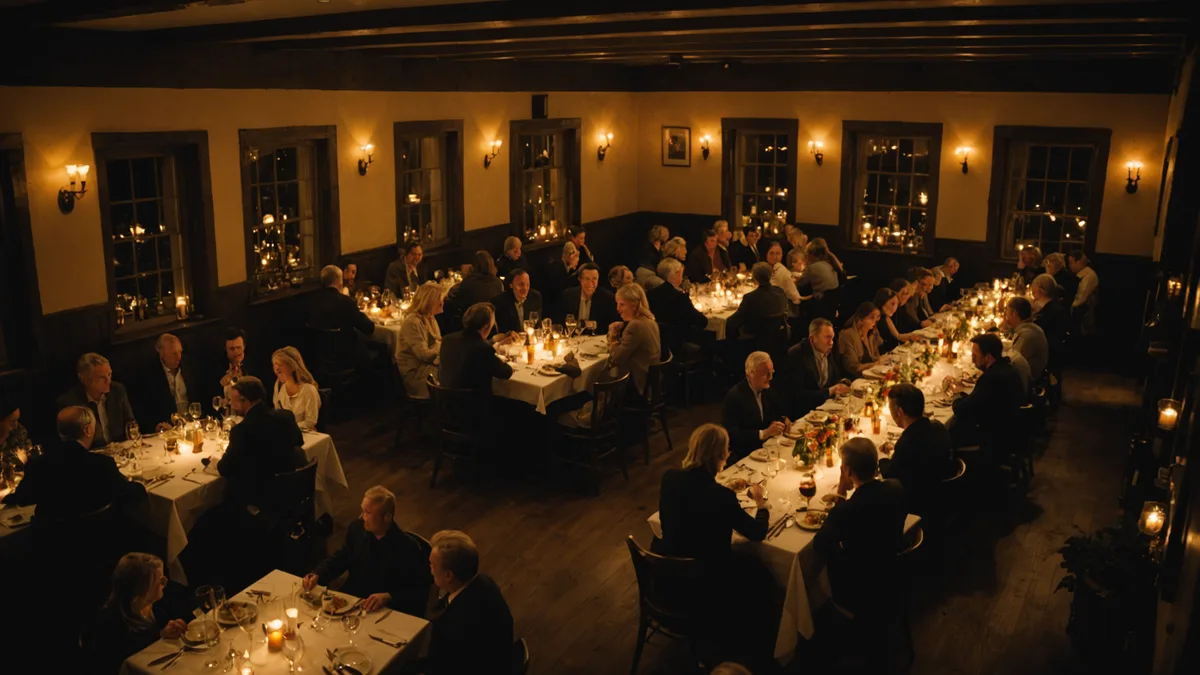
Friday and Saturday evenings are where independent restaurants make their week. For most 45 to 60-seat neighborhood restaurants, those two evenings account for 35 to 45 percent of weekly revenue. Everything else is important, but the weekend dinner service is what the economics of the business depend on.
They are also when the phone is most problematic. The same conditions that make weekend dinner service lucrative, full capacity, high cover turnover, maximum staffing pressure, are the conditions that make the phone hardest to manage. This is not a coincidence. It is a structural feature of how restaurants work during peak service, and it is worth understanding clearly.
The Weekend Service Dynamic
On a quiet Tuesday, answering the phone is low-friction. Someone can step away for 90 seconds, take a reservation or a to-go order, and return to what they were doing without significant disruption. The floor is not at capacity, the kitchen is not firing at maximum speed, and the cost of a brief interruption is minimal.
On a Friday at 7 PM, the situation is categorically different. Every server has three or four tables in active rotation. The kitchen has eight to twelve tickets up at any given moment. The host, if you have one, is managing a wait list and seating walk-ins. The manager is running between the bar, the floor, and the kitchen. Nobody in the building is not busy.
Into this scenario, the phone rings. It rings again. It rings a third time. Everyone hears it and nobody moves, not from indifference but from the physical impossibility of stopping what they are doing at that moment. The call goes unanswered. The caller does not leave a voicemail. They find another option.
The Volume Problem Is Bigger on Weekends
The phone volume problem is not evenly distributed across the week. It is concentrated precisely where service capacity is most strained. The calls you cannot answer are weighted toward your most important service windows.
For a typical independent restaurant, Friday and Saturday evening phone volume runs 40 to 60 percent higher than a comparable Monday or Tuesday. The spike comes from multiple sources: guests calling about wait times before driving over, last-minute reservation requests, takeout orders from people planning their weekend dinner, and same-night inquiry calls from people deciding between options in the neighborhood.
All of those calls arrive between 5:30 and 9 PM on the two busiest nights of your week. The calls that matter most are arriving when your ability to handle them is lowest. The structural tension between peak service demand and peak call volume is not an accident. They are both downstream of the same cause: Friday and Saturday are when people want to go out to dinner.
What the Caller Does When You Do Not Answer
Understanding caller behavior after a missed call is important for quantifying what the missed call actually costs. Most people do not automatically move on to a different restaurant. There is a brief decision window where they are still deciding what to do about dinner.
If they called to check a wait time, they may drive over anyway, or they may decide it is not worth the uncertainty. If they called to place a takeout order, they will place it somewhere else within five minutes, because they are hungry and have already committed to the mental effort of deciding to order. If they called to book a reservation, they may try calling back, but they are also opening their phone to check alternatives simultaneously.
The most costly call to miss, from a revenue perspective, is the takeout order with a defined pickup time. That caller had a specific plan: pick up food at a specific time. When you do not answer, they make the same plan with a different restaurant. The probability of them calling back later that evening or using your restaurant that night approaches zero.
The Accumulation Effect Over a Weekend
Individual missed calls feel small. The accumulation over a full weekend has more weight. A restaurant missing an average of 15 calls per evening on Friday and Saturday is missing 30 calls over the course of a weekend. At a 60 percent transactional intent rate, that is 18 calls from callers ready to spend money. At an average order or cover value of $45, the revenue exposure from a single weekend is $810 in direct missed opportunities.
That is before accounting for callers who tried the restaurant on Saturday, could not get through, and formed a habit of calling a different place. The habit formation cost is harder to quantify but likely exceeds the direct per-weekend number over time.
Over a month with four full weekends, the direct exposure is in the range of $3,200. Over a year, the pattern compounds significantly. This is why owners who run this calculation for the first time typically revise their estimate of how important the phone problem is.
Why Staffing Solutions Do Not Fix This
The intuitive response to a phone coverage problem is to add staff. Hire a host whose job includes phones. Designate one server as the phone person during busy shifts. These approaches fail for the same reason: the phone problem during weekend dinner service is not a staffing level problem. It is a task contention problem.
Any person you designate for phone duty during peak service still has other responsibilities that compete for their attention at the same moments when the phone rings. A host assigned to phones is also seating walk-ins, managing the wait list, and fielding questions from guests at the door. They cannot stop doing all of that to take a detailed takeout order. A server assigned to phones has tables that need attention, and the tables will always win during peak service because the guest is physically present.
The only solution that actually removes the task contention is taking the phone out of the pool of tasks your floor staff manages during service hours. That is structural, not a staffing level adjustment.
The Practical Pattern
For restaurants that add Loman specifically for weekend dinner service, the setup usually runs as follows: Loman handles all inbound calls during the Thursday to Sunday 5 PM to 10 PM window. Notifications route to the manager's device and to a kitchen-facing display for orders. Staff on the floor are not interrupted. The calls are handled, the orders come in through the notification system, and the floor team stays focused on the guests in the room.
The first weekend with this running usually produces a noticeable increase in Saturday takeout volume, not from a change in marketing or pricing, but from calls that were ringing out and are now answered. The floor staff do not notice anything different about their Friday and Saturday, except that nobody is looking for the person who is supposed to be answering the phone.
That low-grade friction, the ambient pressure of "someone needs to get that," is gone from the floor. It is a small thing individually. Across an entire busy service, it has a measurable effect on staff focus and guest experience quality.
What This Does Not Fix
Handling the weekend phone volume does not fix every operational challenge in a busy restaurant. It does not resolve staffing shortages, kitchen bottlenecks, or the fundamental tension between high volume and high service quality. Those are separate problems.
It also does not replace the human interaction that makes an independent restaurant's service worth coming back for. Loman handles the calls; your team handles the guests. The phone is one part of the service system. Getting it right during your two most important evenings of the week is one step toward a full weekend operation that runs the way you built it to run.