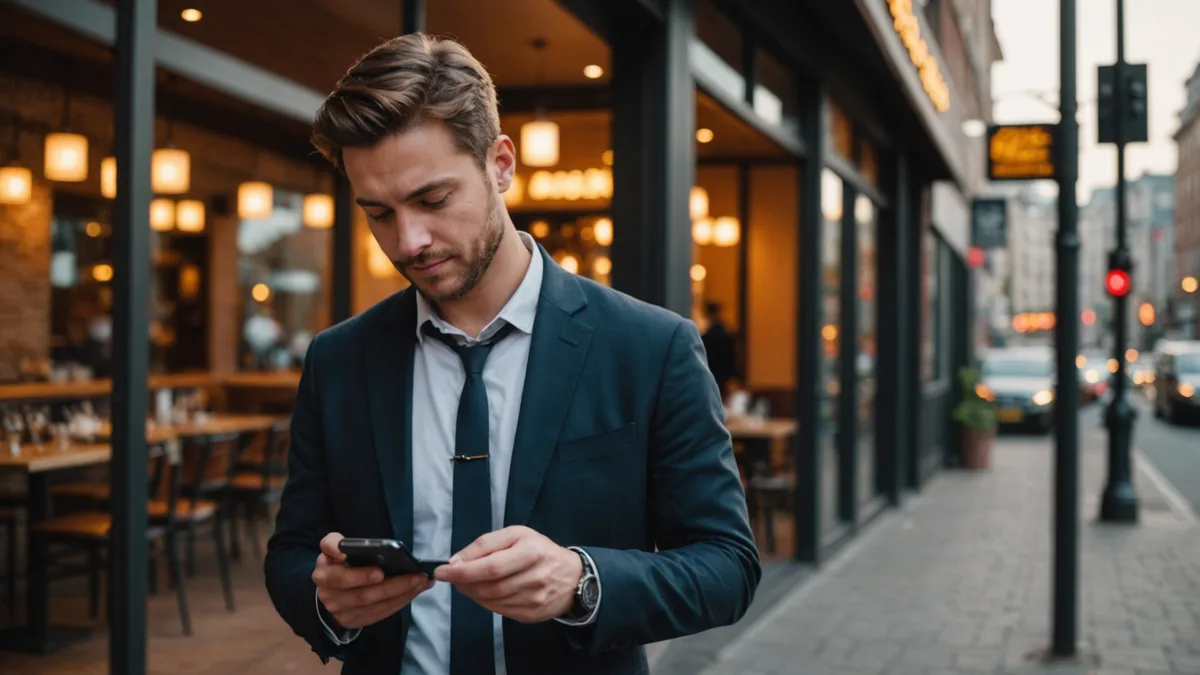
One of the structural realities of owning a restaurant is that you cannot be on the floor all the time. You have supplier meetings, medical appointments, vendor negotiations, kids to pick up, and sometimes you simply need to not be in the building for a few hours. The restaurant keeps running while you are gone, and for most of the operation, your team handles it. But the phone has always been a particular blind spot.
When you are not in the building, you have no visibility into what your phone is doing. You do not know how many calls came in during the lunch rush. You do not know whether the 6 PM reservation for eight people called to confirm or to cancel. You do not know whether someone called asking about catering and then never heard back. The phone has been a gap in the information flow that owners either accepted or tried to patch with callbacks at the end of shift, which is an imperfect reconstruction at best.
The Traditional Phone Model Creates a Location Dependency
The way most restaurants have managed this problem historically is to stay close to the phone, either literally or through a manager who functions as an extension of the owner. When the owner is in the building, they can hear the phone ring and check in on calls that seem unusual. When they are not, they depend on whoever is on the floor to exercise judgment, flag things worth knowing, and handle the rest.
This creates a management model that is tied to physical presence. The owner who leaves for a supplier meeting at 2 PM comes back at 5 PM to whatever the team has handled, without any visibility into what happened during those three hours on the phone. For a busy restaurant, three hours includes meaningful call volume: reservation changes, early dinner inquiries, takeout orders, and potentially calls that needed the owner's attention but went unreported.
The location dependency extends in the other direction as well. An owner who is in the building but occupied in the kitchen or in a meeting cannot monitor what the front is handling on the phone. Physical presence in the building does not equal visibility into phone operations unless you are actively listening.
What Remote Visibility Changes
When every call is handled by Loman and every call produces a notification, the owner has a real-time feed of phone activity regardless of where they are. The notification for a standard takeout order arrives, gets reviewed in two seconds, and is done. The notification for an escalated call, one that needs human follow-up, arrives with the context of what the caller said and what they were trying to accomplish.
This changes the nature of the management relationship with the phone. Instead of reconstructing after the fact ("what calls came in while I was out?"), you have a contemporaneous record that allows you to respond while the situation is still current. A caller who asked about catering for 40 people and got flagged for follow-up can be called back within 20 minutes rather than finding out the next morning that the inquiry came in and nobody followed up.
The time compression on the response to escalated calls is one of the most practically valuable effects. A catering inquiry that sits in a voicemail for 18 hours is a lost opportunity. The same inquiry captured in a notification and flagged to the owner's phone at 3 PM on a Thursday can result in a callback by 4 PM, while the caller is still actively deciding.
Understanding Your Phone Patterns Without Being There
Beyond individual call handling, remote visibility gives owners access to patterns they could not see before. Which hours have the most calls? What categories of calls are most common? Are there recurring questions about a specific menu item or policy that suggest a gap in your website or outgoing message?
This is operational intelligence that was previously unavailable to a small restaurant owner. The data is not complex or overwhelming: it is a call-by-call record of what callers wanted and what happened. But in aggregate, it tells a story about where your phone operations are working and where there are gaps.
A restaurant that gets a lot of calls asking about dietary restrictions might decide to add more specific information to the website, or to train Loman with more detailed allergen information so those calls can be handled without escalation. A restaurant that sees a spike in calls around 5:30 PM on weeknights might conclude that callers are trying to secure early reservations and adjust their reservation availability accordingly. These are decisions informed by data that previously existed only as a vague sense of "we get a lot of calls about X."
Practical Routing Decisions
Remote visibility is only useful if the notifications reach the right person for each type of call. One of the configuration decisions that matters for owners who are frequently off-site is routing: different notification types go to different people.
Standard order confirmations can go to the kitchen or to a shared staff channel. The person managing the kitchen during service is the right recipient for those. Reservation confirmations can go to the host or manager. Escalated calls, the ones that need a human callback, go to the owner or to whoever has the authority to make decisions about catering, special accommodations, or complaint resolution.
Setting up routing correctly means that the owner's notification feed is signal rather than noise. When a notification arrives on the owner's phone from Loman during an off-site meeting, it is because something requires their specific attention, not because a standard takeout order just came in. The operational integrity of that signal depends on having the routing set up thoughtfully at the outset.
What You Still Need to Manage Directly
Remote visibility through Loman does not mean you can disconnect from operations entirely. There are categories of things that still require direct management involvement, and it is worth being clear about what those are so the tool's role stays in appropriate scope.
Staff performance and guest experience in the room require in-person presence at regular intervals. No amount of phone visibility substitutes for watching your team during service and understanding what is working and what is not. The phone is one channel. The broader guest experience happens in the room, and that requires you to be in the room.
Escalated calls require prompt personal follow-up. The benefit of a fast escalation notification is only realized if you actually call back quickly. If escalations arrive on your phone and you batch them for review at the end of the day, you have recreated the 18-hour response gap that the remote visibility was supposed to eliminate. The tool is useful only in conjunction with the discipline to act on the escalation signal when it arrives.
The Broader Argument for Operational Portability
The ability to manage restaurant phone operations from anywhere is part of a broader argument about what small restaurant ownership should look like when you have the right infrastructure. The traditional model ties the owner to the physical space because that is where the information is and where decisions get made. Tools that surface information remotely reduce the dependency on physical presence for categories of work that do not actually require the owner to be in the building.
We are not arguing that restaurant ownership becomes a remote job. It does not and should not. But the specific task of monitoring and responding to phone activity is one that can now be decoupled from physical presence, and that decoupling has real value for the owner who needs to occasionally be somewhere other than the floor. The information follows you. The decisions you can now make from two miles away are decisions you previously could not make until you got back.